AI Coding Agents in 2026: Real Workflows Worth Delegating
AI coding agents are no longer just autocomplete with a nicer chat box. By June 2026, the useful question is narrower: which software tasks can a small team hand off without creating more review work than it saves?
The answer from current English sources is fairly consistent. Coding agents work best when the task is scoped, the repository has tests or a clear acceptance checklist, and a human reviews the output before it ships. They are much weaker when the request is vague, the codebase has hidden business rules, or the agent is allowed to change too much without a checkpoint.
What changed in the last 12 months
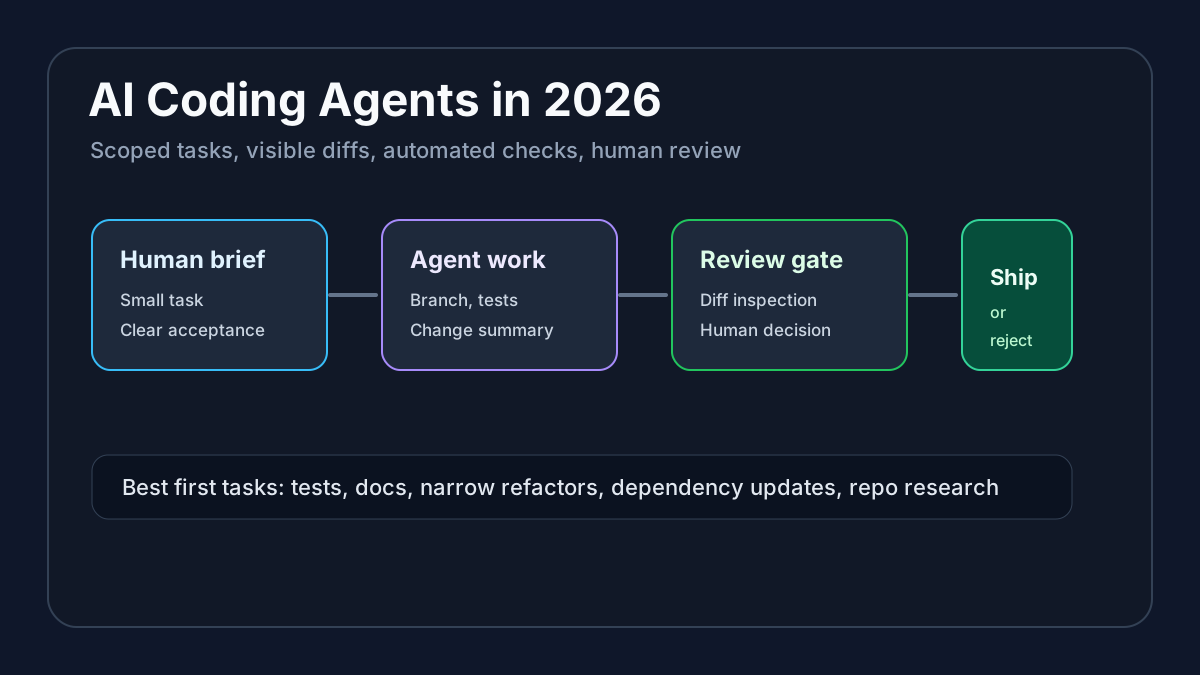
The market shifted from "ask the assistant in your editor" to "assign a task and review a branch."
OpenAI describes Codex as a coding agent used for repetitive, well-scoped work such as refactoring, renaming, tests, bug fixes, scaffolding, and documentation. OpenAI also notes that remote delegation takes longer than interactive editing and still needs user review (OpenAI Codex).
GitHub's Copilot cloud agent now works inside a GitHub Actions-powered environment, can create branches, make changes, and prepare pull requests for review. GitHub's own docs emphasize logs, commits, custom instructions, and usage metrics because the work needs to be inspectable (GitHub Docs).
Anthropic has pushed Claude Code toward larger end-to-end work. Its product page says Claude Code reads a codebase, edits files, runs tests, and delivers committed code. The same page lists enterprise examples from Stripe, Ramp, Wiz, and Rakuten, but also keeps the human in control of what gets committed (Claude Code).
Google's Jules is another sign of the same pattern: asynchronous work in a secure cloud VM, GitHub integration, visible plans, reasoning, and diffs before the user accepts changes (Google Jules).
None of this means "fire the developer." It means the review surface changed. The human is now writing better task briefs, deciding what is safe to delegate, and checking the result.
Source pack used for this article
All research sources below are English-language sources checked on June 5, 2026.
| Source type | Sources checked | What they verified |
|---|---|---|
| Official product sources | OpenAI Codex, Codex GA, GitHub Copilot cloud agent, GitHub agents panel | Background task delegation, PR workflow, task logs, custom instructions |
| Official product sources | Claude Code, Claude dynamic workflows, Google Jules, Vercel v0 update | Full-codebase edits, long-running workflows, cloud VM execution, upcoming agentic app workflows |
| Open-source and research | OpenHands GitHub, OpenHands Index, AIDev agent comparison, failed agent PR study | Model-agnostic agents, benchmark limits, task-specific acceptance rates, common failure modes |
| News and community | Axios Codex office-work report, TechCrunch on agentic coding tools, r/ClaudeCode workflow thread, Reddit OpenHands note | Real user workflows, caution around auto-approval, specs, tests, checkpoints |
Six workflows worth delegating first
1. Test writing for existing behavior
This is the safest first assignment. The agent does not need to invent product strategy. It reads existing code, writes tests around known behavior, and runs the suite.
OpenAI lists writing tests among Codex's common well-scoped tasks. Google Jules also names writing tests as a core use case. The academic evidence points in the same direction: agent-authored PRs tend to do better on documentation, CI, and build-related tasks than on more ambiguous bug fixes or performance work (failed PR study).
Good task brief:
Add regression tests for the checkout discount calculation. Do not change production logic unless a test exposes a real bug. Run the existing payment test suite and report any failing case separately.
Bad task brief:
Make checkout better.
2. Dependency and framework updates
Agents are useful when the work is boring but checkable: update a package, fix imports, run tests, and summarize what changed. Google Jules explicitly lists dependency version bumps. Claude's dynamic workflow announcement uses large migrations as one of the use cases, but for a small team the safer version is a narrow upgrade with a rollback plan.
Use this for:
- Node, React, Next.js, or SDK version bumps
- Deprecated API replacement
- Typed import cleanup
- Test or lint failure repair after an upgrade
Do not let the agent upgrade ten core dependencies at once. One package, one branch, one test target.
3. Documentation and changelog work
Documentation is a strong agent task because the expected output is easier to review than hidden product logic. The AIDev comparison paper found documentation tasks had higher acceptance than new feature tasks, and Claude Code's product examples include codebase navigation and documentation-style work.
Good assignments:
- Write setup docs from the actual repo
- Turn a merged PR into a changelog entry
- Explain a feature flag or environment variable
- Compare current docs against current code and list gaps
This is also a good non-engineer entry point. A founder or product manager can use an agent to draft docs, then ask an engineer to review the few places where the agent had to infer behavior.
4. Small refactors with tight boundaries
Refactors work when the goal is mechanical and the blast radius is limited. OpenAI mentions renaming and refactoring as Codex use cases. GitHub Copilot cloud agent is designed for branch-based work where changes become reviewable.
Good examples:
- Rename a component prop across a feature folder
- Move utility functions into one module
- Replace repeated validation code with an existing helper
- Clean up dead code found by a static analysis pass
Bad examples:
- "Modernize the whole app"
- "Improve architecture"
- "Make this production-ready"
Those requests sound efficient, but they hide too many decisions.
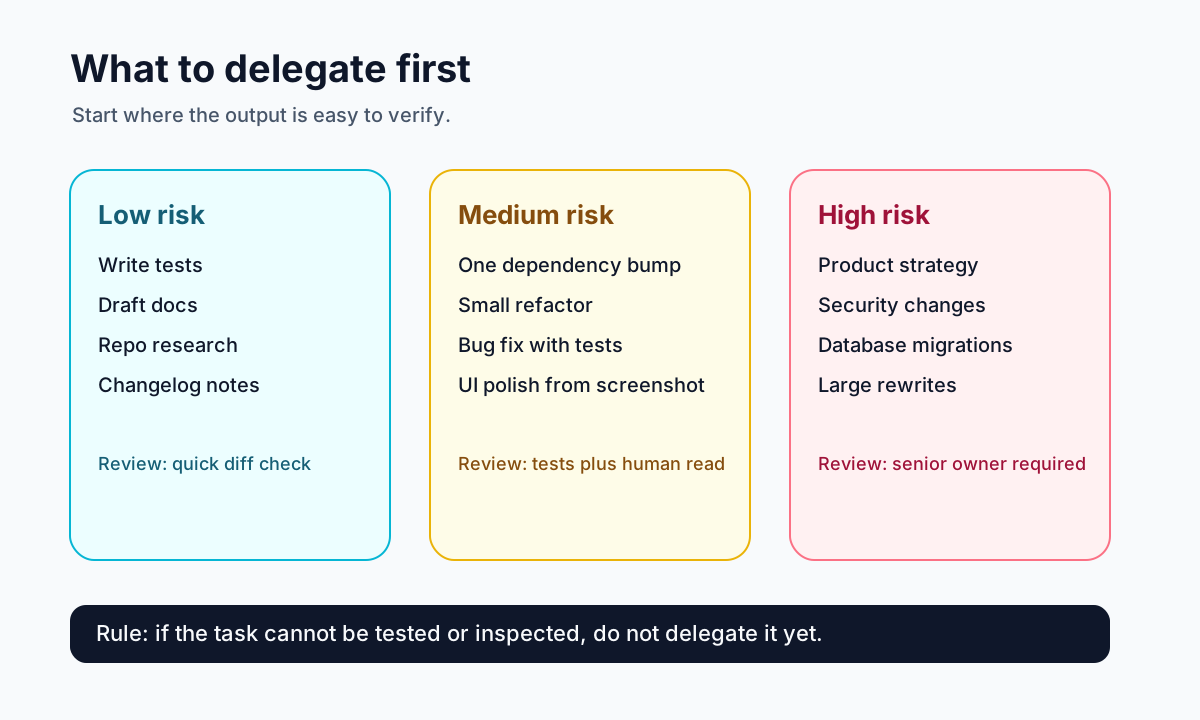
5. Repository research before a human starts work
This is underrated. Ask the agent to map the repo, trace a feature, find the files likely involved, and propose a plan without changing anything.
GitHub's docs mention asking Copilot to research a repository and create a plan before code changes. Claude Code is also positioned around navigating unfamiliar codebases. This is useful for freelancers taking over a client project, founders reviewing inherited code, or a small team deciding whether a bug is worth fixing now.
Prompt shape:
Read the repo and explain how invoices are generated. Do not edit files. Return the main files, data flow, unresolved questions, and the smallest safe change if we want to add invoice notes.
This gives you leverage without trusting the agent to ship code.
6. Data and research scripts for non-developers
Axios reported that Stanford professor Andrew Hall and students used Codex and Claude Code for data collection, statistical analysis, and code execution. The useful part of that report is the audit detail: the agent did many things right, but a graduate student still found errors in data collection and coding.
That is the right mental model. Coding agents can help knowledge workers create scripts, process data, and generate charts. They should not be treated as the final analyst.
Good first projects:
- Clean a CSV and generate a short report
- Pull public data into a notebook
- Create charts from a fixed dataset
- Re-run an old analysis with updated data
Required review:
- Check the data source
- Inspect missing rows
- Recalculate one or two results manually
- Confirm the chart labels match the data
What not to delegate yet
The failure pattern is not mysterious. Agents struggle when they need missing context, secret business rules, or careful human judgment.
Avoid assigning:
- New product strategy disguised as code work
- Security-sensitive changes without a human security review
- Database migrations that cannot be rolled back
- Performance work without a measurable baseline
- Work involving private credentials or unclear tool permissions
- Anything where "looks right" is the only test
TechCrunch's 2025 agentic coding report included a useful warning from All Hands AI CEO Robert Brennan: human review is still needed, and auto-approving everything can get out of hand quickly. The 2026 failed-agent-PR paper backs up the same practical concern: not-merged agent PRs often touch more files, fail CI, duplicate work, or misalign with reviewer expectations.
The small-team operating model
If you are building a solo SaaS, a client dashboard, an internal tool, or a small automation product, start with a simple weekly system.
| Day | Human work | Agent work | Review gate |
|---|---|---|---|
| Monday | Pick 3 small tasks | Repo research and task plans | Human approves task boundaries |
| Tuesday | Write acceptance checks | Tests, docs, small refactor | Existing tests pass |
| Wednesday | Review one draft PR | Fix failures and explain changes | Human code review |
| Thursday | Merge low-risk work | Changelog and docs | No broken links or missing steps |
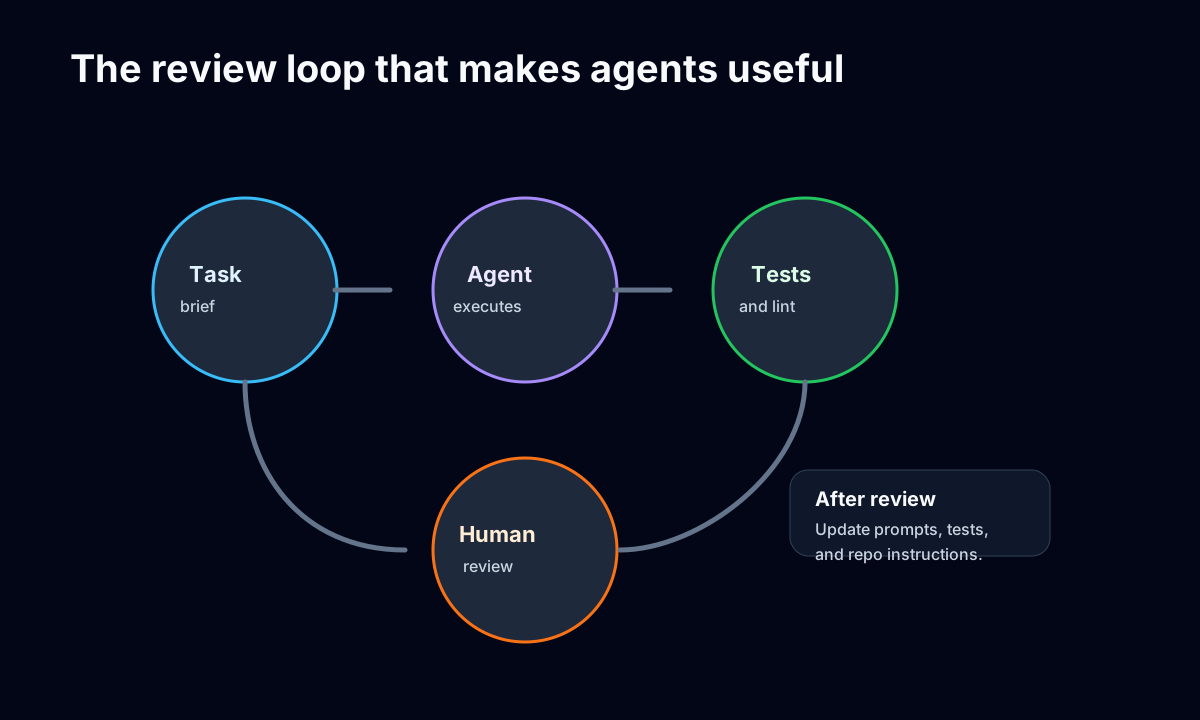
| Friday | Retrospective | Summarize what failed | Update prompts and repo instructions |
The goal is not to keep the agent busy. The goal is to create a repeatable review loop.
A practical checklist before you pay for another tool
Before buying another coding-agent subscription, answer these questions:
- Do we have small tasks that repeat every week?
- Do we have tests, lint checks, or acceptance checklists?
- Can the agent work on a branch instead of directly changing production code?
- Can a human review the diff before merge?
- Do we know which files, secrets, and tools the agent can access?
- Do we track whether agent PRs are merged, rejected, or reworked?
If the answer is mostly no, spend your first hour improving the workflow, not shopping for a new agent.
Bottom line
AI coding agents are useful in 2026, but the best use is not unlimited autonomy. The best use is delegation with evidence: a clear task, a visible plan, a small diff, automated checks, and a human who still decides what ships.
For AiToMake readers, the business opportunity is not "sell AI magic." It is helping small teams install this review loop: issue templates, repo instructions, test gates, documentation workflows, and a practical rule for what the agent is allowed to touch.
That is a service a client can understand. It is also something you can test on your own project before asking anyone to pay for it.
Related reading
- Claude vs Cursor for Documentation Workflows
- Enterprise AI Adoption Patterns
- Real-World AI Practice Case Library 2026
- AI Tool Stack Cost Calculator
Tool capabilities, pricing, and access rules change quickly. Verify current product pages before choosing a paid plan. This article is educational and does not guarantee income or software quality. See our Editorial Policy and Earnings Disclaimer.