
How to Use AI for Content Creation and Make Money
The content creation economy is experiencing an unprecedented surge. In 2026, generative AI adoption has reached near-universal levels, with 80% to 94% of marketers actively leveraging AI in their daily operations [1]. According to the Content Marketing Institute (CMI), content teams using AI save an average of 6.1 to 10+ hours per week, reducing the time required to draft a comprehensive article from 8.2 hours down to just 2.7 hours [2].
Meet Lisa, a freelance writer who struggled to earn $2,000/month writing 15-20 articles. After integrating AI into her workflow, she now produces 45-50 articles monthly and earns $6,500—without working longer hours. Her secret? She shifted from being a writer to being an editor-in-chief, with AI as her writing team.
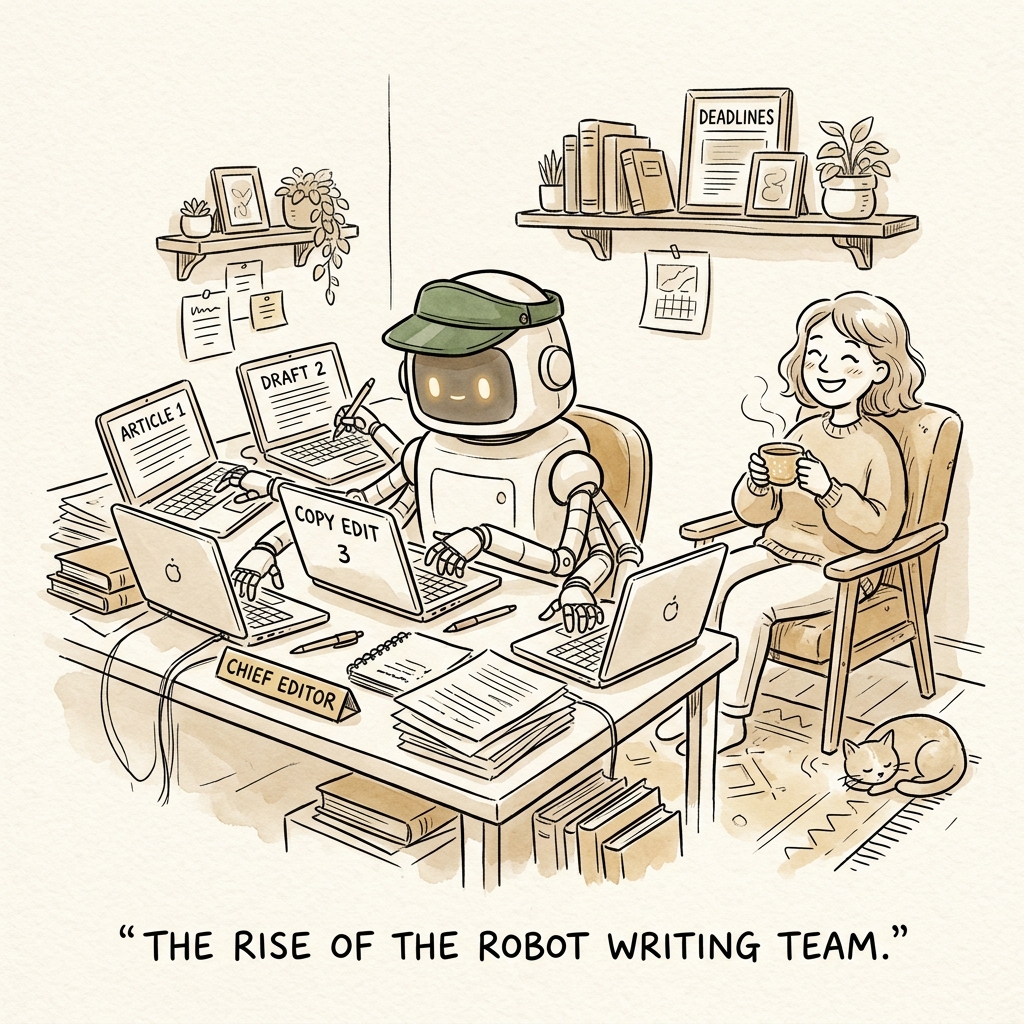
The content creation landscape has transformed. However, this massive increase in speed has triggered a content bottleneck: generic, automated articles are saturating search engines. The real competitive advantage in 2026 is no longer raw volume—it is human-in-the-loop differentiation. In fact, 73% of top-performing marketing teams now prioritize human editing to ensure authenticity and brand voice [1]. By shifting from a mere writer to an editor-in-chief, you can leverage AI to produce highly specialized, high-converting content at scale while earning premium payouts.
In this comprehensive guide, you'll discover:
- 6 content types you can create with AI and how to monetize each
- Complete AI content workflow from research to publication
- Quality control strategies to ensure AI content sounds human and authentic
- 3 monetization models for turning AI content into consistent income
- Best AI tools for content creation with honest reviews
- Real success stories from creators earning $3K-$10K+ monthly
- Ethical guidelines for transparent AI use
Whether you want to freelance, build your own content business, or create passive income through content websites, this guide will show you exactly how to do it in 2026.
Why AI Content Creation is a Goldmine in 2026
The demand for content has never been higher. Businesses need blog posts, social media updates, email sequences, video scripts, and more—constantly. But quality content creators are expensive and slow.
Enter AI-powered content creation.
The numbers don't lie:
- 82% of marketers now use AI for content creation (HubSpot, 2024)
- Content demand increased 350% from 2020 to 2024
- Average cost per blog post: $200-500 (businesses are willing to pay)
- AI-assisted writers produce content 7x faster than traditional methods
What this means for you: You can serve more clients, charge competitive rates, and still work fewer hours than traditional content creators. The bottleneck isn't ideas or writing speed anymore—it's finding clients and maintaining quality.
6 Content Types You Can Create with AI (And How to Get Paid)
Let's break down exactly what you can create and how to monetize each content type.
1. Blog Posts & Articles
What it is: Long-form written content for websites, from 500-word blog posts to 3,000-word pillar articles.
Why it's profitable: Every business with a website needs blog content for SEO, thought leadership, and customer education. It's one of the highest-demand content types.
AI advantage: Research, outline, and first draft in 30 minutes vs. 3-4 hours traditionally.
How to monetize:
- Freelancing: $75-250 per article on Upwork/Fiverr
- Retainer clients: $1,500-4,000/month (10-20 articles)
- Content websites: Build your own blog, monetize with ads/affiliates
Best practices:
- Always edit AI output—never publish raw AI text
- Add personal insights and examples AI can't generate
- Fact-check every claim
- Optimize for SEO keywords naturally
Income potential: $2,000-8,000/month
Tools needed: ChatGPT Plus ($20/mo), Grammarly (free-$12/mo), Surfer SEO (optional, $89/mo)
2. Email Marketing Content
What it is: Email sequences, newsletters, promotional campaigns, welcome series, and nurture sequences.
Why it's profitable: Email marketing has a 36:1 ROI on average. Businesses invest heavily because it directly drives sales.
AI advantage: Generate entire 5-7 email sequences in 20 minutes. Test multiple subject lines instantly.
How to monetize:
- Email sequence creation: $300-800 per 5-email sequence
- Newsletter ghostwriting: $200-600 per newsletter
- Monthly retainers: $800-2,500/month for ongoing email content
Best practices:
- Understand the customer journey
- Write compelling subject lines (AI excels at generating 20+ options)
- Include clear CTAs
- A/B test with different AI-generated variations
Income potential: $2,500-7,000/month
Real example: Tom writes email sequences for e-commerce brands. He uses AI to draft emails, then personalizes them with the brand voice. He serves 8 clients at $600/month each = $4,800 monthly recurring revenue.
3. Social Media Content
What it is: Posts for Facebook, Instagram, LinkedIn, Twitter/X, TikTok—including captions, hashtags, and content calendars.
Why it's profitable: Small businesses know they need social media but don't have time. They'll pay $500-1,500/month to someone who can handle it.
AI advantage: Create 30 days of social media content in 2-3 hours. Generate image concepts, captions, and optimal posting times.
How to monetize:
- Social media management: $600-1,500/month per client
- Content calendar creation: $200-500 one-time fee
- Bulk content packages: $300 for 30 posts
Best practices:
- Use AI for caption generation and content ideas
- Pair with Canva AI for visual content
- Schedule with Buffer or Hootsuite
- Maintain brand voice consistency
Income potential: $3,000-9,000/month (managing 5-10 clients)
Scaling strategy: One person can realistically manage 10-12 clients using AI tools. That's $6,000-15,000/month potential.
4. Video Scripts
What it is: Scripts for YouTube videos, TikToks, Instagram Reels, explainer videos, and video sales letters.
Why it's profitable: Video dominates content consumption, but scripting is time-consuming. YouTubers and businesses pay well for quality scripts.
AI advantage: Generate a 10-minute YouTube script in 15 minutes. Create hooks, structure, and CTAs automatically.
How to monetize:
- YouTube scripts: $100-400 per script
- Short-form video scripts: $30-75 per script
- Video sales letters: $500-2,000 per project
- Ongoing scriptwriting: $1,000-3,000/month retainer
Best practices:
- Study successful videos in the niche
- Include timestamps and visual cue suggestions
- Write for the ear, not the eye (scripts are spoken)
- Add personality—AI can be too formal
Income potential: $2,000-6,000/month
Success story: Rachel scripts YouTube videos for 4 education channels. She uses ChatGPT to research and outline, then writes conversational scripts. At $250/script and 20 scripts/month, she earns $5,000/month.
5. Ad Copy & Marketing Materials
What it is: Facebook/Google ads, landing pages, sales pages, product descriptions, and marketing emails.
Why it's profitable: Ad copy directly impacts revenue. Businesses pay premium prices for copy that converts.
AI advantage: Generate 20 ad variations in minutes for A/B testing. Create full landing pages in under an hour.
How to monetize:
- Ad copy packages: $300-1,000 (10-20 ad variations)
- Landing page copy: $500-2,500 per page
- Product descriptions: $10-30 each (bulk pricing)
- Performance-based: Commission on ad spend (advanced)
Best practices:
- Learn direct response copywriting fundamentals
- Use AI to generate variations, then pick winners
- Include persuasive elements: benefits, social proof, urgency
- Test, test, test—AI makes A/B testing easy
Income potential: $3,000-10,000/month
Advanced strategy: Partner with marketing agencies. They have clients but lack copywriters. You become their go-to AI-powered copywriter.
6. Long-Form Content (Ebooks, White Papers, Reports)
What it is: In-depth content like ebooks, industry reports, white papers, guides, and case studies.
Why it's profitable: High-value content commands premium prices. These are lead magnets and thought leadership pieces.
AI advantage: Structure and draft a 50-page ebook in 4-6 hours vs. weeks traditionally.
How to monetize:
- Ebook ghostwriting: $1,500-5,000 per ebook
- White papers: $2,000-8,000 per project
- Case studies: $500-1,500 each
- Industry reports: $3,000-10,000 per report
Best practices:
- Create detailed outlines first
- Generate section by section, not all at once
- Add original research and data
- Professional formatting is essential
Income potential: $4,000-15,000/month
Target clients: SaaS companies, B2B businesses, consultants, and thought leaders.
The Complete AI Content Creation Workflow
Here's my proven 5-step process for creating high-quality AI content that clients love and audiences engage with.
Step 1: Research & Strategy (10 minutes)
What to do:
- Define your content goal and target audience
- Research the topic using AI
- Identify keywords and search intent
- Review top-performing content in the niche
AI prompts to use:
"Research [topic] and provide:
1. Key subtopics to cover
2. Common questions people ask
3. Current trends and statistics
4. Unique angles not commonly covered"Tool: ChatGPT or Claude
Pro tip: Use AI to analyze competitor content and identify gaps. Ask: "What's missing from these top 10 articles on [topic]?"
Step 2: Outline & Structure (5 minutes)
What to do:
- Create a detailed outline with H2s and H3s
- Plan hook, body, and conclusion
- Identify where examples and data are needed
AI prompt:
"Create a detailed outline for [content type] about [topic]:
- Target audience: [description]
- Goal: [educate/persuade/entertain]
- Length: [word count]
- Include: engaging hook, 5-7 main sections, FAQs, CTA
- Tone: [professional/casual/technical]"Output: A complete skeleton ready to fill with content.
Step 3: AI Generation & First Draft (20-30 minutes)
What to do:
- Generate content section by section
- Keep each prompt focused on one section
- Request specific examples and data points
AI prompt structure:
"Write the [section name] section (300-500 words):
- Key points to cover: [list]
- Include: [specific examples/statistics needed]
- Tone: [your brand voice]
- Avoid: [common AI phrases like 'delve', 'moreover']
- Write in short paragraphs (2-4 sentences)"
Critical rule: NEVER generate an entire 2,000-word article in one prompt. Break it into sections for better quality.
Step 4: Human Editing & Enhancement (30-45 minutes)
This is where quality is made.
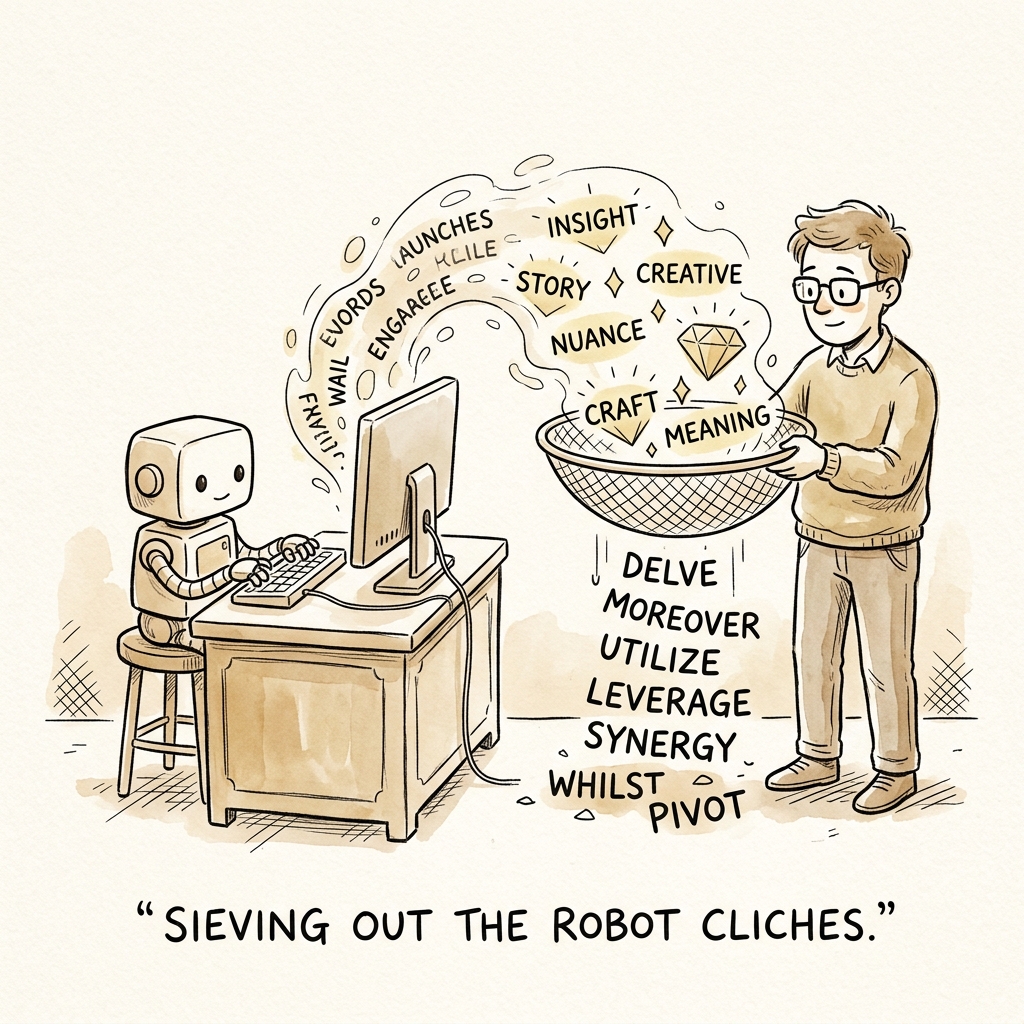
Industry benchmarks show that integrating rigorous human editing into the AI workflow increases content ROI by 2.4x to 3.2x compared to publishing raw, automated output [2]. Without human polishing, AI content remains thin, generic, and highly vulnerable to search engine quality filters.
What to edit:
✅ Add personality:
- Replace generic phrases with specific examples
- Include personal anecdotes or client stories
- Add conversational transitions
- Inject humor or emotion where appropriate
✅ Fact-check everything:
- Verify all statistics and data points
- Check that examples are accurate
- Ensure links work and are relevant
- Validate AI-generated "facts" (AI sometimes invents data)
✅ Remove AI tells:
- Delete overused AI words: delve, moreover, furthermore, however (at start of sentences), additionally
- Vary sentence structure
- Replace passive voice with active voice
- Cut unnecessary qualifiers: "quite," "very," "really"
✅ Improve flow:
- Ensure logical progression between paragraphs
- Add transition sentences
- Break up walls of text
- Use bullet points for scannability
Quality checklist:
- Sounds like a human wrote it
- All facts verified
- Specific examples included
- No AI clichés
- Engaging hook
- Clear CTA
Step 5: SEO Optimization & Publishing (10-15 minutes)
What to do:
- Optimize title and meta description
- Add keywords naturally (don't stuff)
- Format with headers (H2, H3)
- Add internal and external links
- Include images with alt text
- Check readability score (aim for 7th-8th grade level)
Tools:
- Grammarly: Grammar and clarity
- Hemingway Editor: Readability
- Yoast SEO or Surfer SEO: SEO optimization
Final check: Read the entire piece aloud. If it sounds robotic or awkward, edit more.
Quality Control: Making AI Content Sound Human
The #1 mistake AI content creators make? Publishing raw AI output.
The truth: Readers can tell. Google can tell. Clients definitely can tell.
Here's how to ensure your AI content passes as authentic, valuable human-written content:
Red Flags to Remove
🚫 AI Vocabulary Overuse:
- Delve, dive deep, explore
- Moreover, furthermore, additionally (at sentence starts)
- It's worth noting that...
- In today's digital landscape...
- Unlock the power of...
- Revolutionize, game-changer, cutting-edge (unless genuinely applicable)
🚫 Generic Statements:
- "Many experts believe..."
- "Studies show..." (without citing specific studies)
- "This is important because..."
- Hedging language: "might," "could," "possibly" (overused)
🚫 Repetitive Structure:
- Every paragraph starting the same way
- Identical sentence lengths
- Predictable list structures
Green Lights: What to Add
✅ Specificity:
- Replace "increase productivity" with "finish articles 3x faster"
- Instead of "save money," say "cut content costs from $500 to $150/article"
- Use exact numbers, not ranges
✅ Personal Touch:
- Add "In my experience..."
- Include client stories (anonymized if needed)
- Share mistakes you've made
- Add opinions AI wouldn't have
✅ Conversational Elements:
- Rhetorical questions
- Direct address ("You might be thinking...")
- Contractions (don't, can't, you'll)
- Occasional sentence fragments. For emphasis.
The Human Enhancement Formula
For every 1,000 words of AI-generated content, spend at least 30 minutes:
- 10 minutes: Removing AI tells and improving flow
- 10 minutes: Adding specific examples and personality
- 10 minutes: Fact-checking and verifying information
This editing is where you add value. Clients pay for quality, not just quantity.
3 Ways to Monetize AI Content Creation
Now that you know how to create quality AI content, here's how to turn it into income. In 2026, B2B companies are dedicating 45% more budget specifically to AI-augmented content pipelines [2]. If you can provide humanized, high-ROI assets, businesses are willing to pay top dollar.
Model 1: Freelancing (Fastest to Start)
What it is: Offering content creation services to clients on platforms like Upwork, Fiverr, or direct outreach.
Pros:
- Start earning in 1-2 weeks
- Predictable income
- Learn what content sells
- Build portfolio quickly
Cons:
- Income caps (limited by your hours)
- Client management overhead
- Platform fees (Upwork: 10-20%, Fiverr: 20%)
How to start:
- Choose 1-2 content types to specialize in
- Create 3 portfolio samples using AI
- Set up profiles on Upwork and/or Fiverr
- Price competitively initially (raise rates after 5-10 reviews)
- Apply to 10 jobs daily
Income timeline:
- Month 1: $500-1,500 (building reviews)
- Month 2-3: $2,000-4,000 (raising rates, more clients)
- Month 4+: $4,000-10,000 (retainers, premium pricing)
Success factors:
- Fast response times
- Over-deliver on first projects
- Request reviews from happy clients
- Specialize in one niche (SaaS, health, finance)
Model 2: Content Agency (Higher Earning Potential)
What it is: Building your own content creation business with multiple clients on retainer.
Pros:
- Higher rates (not competing on platforms)
- Recurring monthly revenue
- Build a real business asset
- Can hire/outsource and scale beyond your time
Cons:
- Slower to start (need to find clients directly)
- Requires business/sales skills
- More responsibility
How to start:
- Pick a specific niche (B2B SaaS, e-commerce, health tech)
- Create a simple website showcasing your services
- Develop case studies from freelance work
- Outreach via LinkedIn, cold email, or networking
- Offer retainer packages ($2,000-5,000/month)
What to charge:
- Blog content: $2,000-4,000/month (8-16 posts)
- Full content marketing: $4,000-10,000/month (blogs, emails, social)
- Premium clients: $10,000-25,000/month (comprehensive content)
Income timeline:
- Month 1-3: $0-2,000 (building pipeline)
- Month 4-6: $3,000-8,000 (first retainer clients)
- Month 7-12: $8,000-20,000+ (3-5 clients, systems in place)
Scaling: Once profitable, hire AI-savvy editors at $20-30/hour. You manage clients, they produce content. This is how you break the income ceiling.
Model 3: Content Websites (Passive Income)
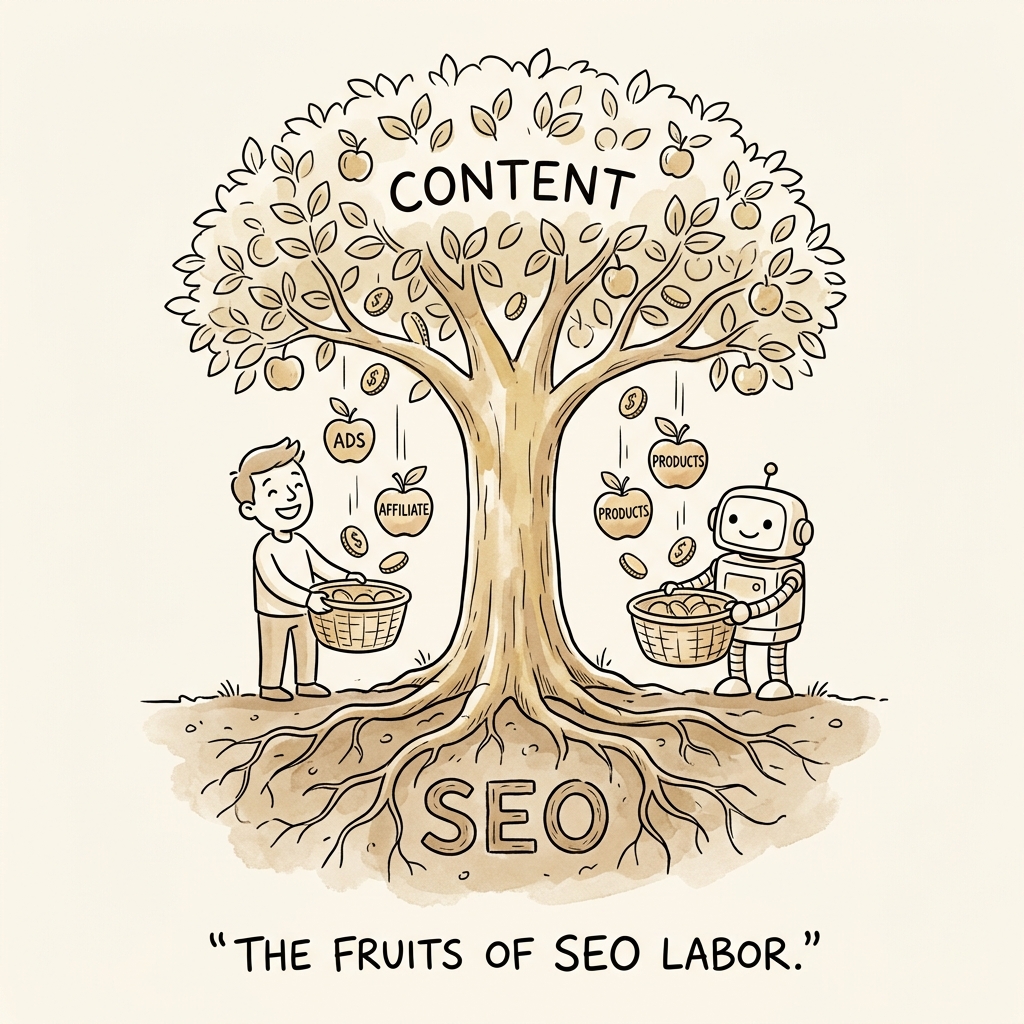
What it is: Building your own niche websites, creating AI-generated content, and monetizing with ads, affiliates, or products.
Pros:
- Potential passive income
- Own the asset (can sell sites for 30-40x monthly profit)
- No client management
- Total creative control
Cons:
- Takes 6-12 months to see significant income
- Requires SEO knowledge
- Algorithm risk (Google updates)
- Upfront work before income
How to start:
- Choose a profitable niche (affiliate programs available)
- Research keywords with search volume
- Create 50-100 AI-generated, edited articles
- Publish consistently (3-5/week initially)
- Build backlinks
- Monetize when traffic reaches 10K+ visitors/month
Monetization:
- Display ads (Google AdSense, Mediavine): $10-40 per 1,000 visitors
- Affiliate marketing: 5-30% commissions on sales
- Digital products: Ebooks, courses, templates
- Sponsorships: $500-5,000+ per sponsored post
Income potential:
- 10K visitors/month: $500-2,000/month
- 50K visitors/month: $3,000-10,000/month
- 100K+ visitors/month: $8,000-30,000+/month
Realistic timeline: 12-18 months to reach $3,000/month. But once established, it's scalable and partially passive.
Success example: Mike built a personal finance site using AI content. After 14 months and 120 articles, he earns $4,200/month from affiliate commissions and ads. He now publishes 2 articles/week to maintain and grow.
Best AI Tools for Content Creation (2026 Edition)
Here are the tools I actually use and recommend, with honest assessments.
Writing & Generation
ChatGPT Plus ($20/month)
- Rating: ⭐⭐⭐⭐⭐
- Best for: Blog posts, emails, social media, scripts
- Pros: Versatile, fast, great for ideation and research
- Cons: Can be verbose, sometimes invents facts
- Verdict: Essential. This is your primary tool.
Claude Pro ($20/month)
- Rating: ⭐⭐⭐⭐
- Best for: Long-form content, editing, nuanced writing
- Pros: Better at maintaining voice, less robotic
- Cons: Slower outputs, more conservative
- Verdict: Optional but valuable for quality editing.
Jasper AI ($49-125/month)
- Rating: ⭐⭐⭐
- Best for: Marketing copy, templates
- Pros: Marketing-focused templates, brand voice memory
- Cons: Expensive, similar output to ChatGPT
- Verdict: Skip unless you have budget. ChatGPT does 90% of this.
SEO & Optimization
Grammarly (Free - $12/month)
- Rating: ⭐⭐⭐⭐⭐
- Best for: Grammar, clarity, readability
- Pros: Catches errors AI misses, tone detection
- Cons: Free version has limits
- Verdict: Essential. Get Premium if you're serious.
Surfer SEO ($89/month)
- Rating: ⭐⭐⭐⭐
- Best for: SEO optimization, content scoring
- Pros: Data-driven SEO recommendations, SERP analysis
- Cons: Pricey, learning curve
- Verdict: Worth it if doing SEO content or own sites.
Research & Ideation
Perplexity AI (Free - $20/month)
- Rating: ⭐⭐⭐⭐
- Best for: Research with citations, current events
- Pros: Provides sources, real-time information
- Cons: Not as creative as ChatGPT
- Verdict: Great supplement for research phase.
Starter Stack (Minimal Budget)
Total: $20/month
- ChatGPT Plus ($20)
- Grammarly Free ($0)
This is enough to start freelancing and earning.
Professional Stack (Established Business)
Total: $140/month
- ChatGPT Plus ($20)
- Claude Pro ($20)
- Grammarly Premium ($12)
- Surfer SEO ($89)
- Perplexity Pro ($20)
Invest here once you're earning $3,000+/month.
Real Success Story: Lisa's 3x Income Increase
Let's revisit Lisa's journey in detail—because her path is replicable.
Background: Lisa, 29, worked as a freelance writer for 3 years, earning $1,800-2,300/month. She wrote 15-20 articles monthly at $100-120 each. She felt maxed out.
The Problem:
- Each article took 3-4 hours (research, writing, editing)
- Couldn't take on more clients without burning out
- Rates plateaued—she wasn't fast enough to justify higher prices
The Turning Point (Month 1):
Lisa experimented with ChatGPT Plus. Her first AI-assisted article took 2 hours—still slow because she was learning the workflow.
By the end of Month 1, she'd optimized her process to 1 hour per article. She completed 25 articles that month instead of her usual 18. Income: $2,500 (+25%).
Scaling Up (Month 2-3):
With her newfound speed, Lisa:
- Took on 2 new retainer clients ($1,500/month each for 10 articles)
- Raised rates on existing clients to $150/article
- Produced 40-45 articles/month working the same hours
Income Month 2: $4,100 Income Month 3: $6,200
Systematic Growth (Month 4-6):
Lisa refined her niche to SaaS and B2B tech content. She:
- Pitched directly to SaaS companies (higher budgets)
- Increased rates to $200-250/article
- Maintained 3 retainer clients + project work
- Produced 45-50 articles/month
Income Month 6: $8,500
Current State (18 months later):
Lisa now runs a small content agency. She:
- Manages 5 retainer clients ($15,000/month total)
- Hired 2 junior writers/editors who use AI ($25/hour each)
- Works 25-30 hours/week (mostly client management and editing)
- Net income: $9,500/month
Her key lessons:
-
AI is your teammate, not your replacement: "I don't write anymore. I direct, edit, and quality-control. That's far more scalable."
-
Quality control is everything: "I spend 30-40% of my time editing AI content. That's where the value is. Clients pay for my judgment, not AI access."
-
Specialize to charge more: "When I generalized, I competed on price. When I specialized in SaaS content, I competed on expertise."
-
Systemize before you scale: "I documented my entire workflow. When I hired help, they could replicate my quality immediately."
-
Client relationships matter more than output volume: "I could produce 100 articles/month. But 5 great clients paying well is better than 20 clients nickeling-and-diming."
Ethics & Transparency: Using AI Responsibly
The big question: Should you tell clients you use AI?
The honest answer: It depends on the context, but transparency builds trust.
When to Disclose
Definitely disclose if:
- Client explicitly asks about your process
- You're writing for publication (journalism, academic)
- Contract or platform requires disclosure
- Content is presented as purely human-created
Disclosure script:
"I use AI tools to research and generate initial drafts, which I then extensively edit, fact-check, and personalize. This allows me to deliver high-quality content faster without compromising on quality or accuracy."
Frame it as an advantage: You're more efficient, not cutting corners.
When It's a Non-Issue
You don't need to proactively disclose when:
- Delivering results-focused work (content marketing, SEO articles)
- Client cares about outcomes, not process
- You're heavily editing and adding value (which you should be)
Think of it like this: Graphic designers don't disclose which Photoshop tools they used. Developers don't list every code library. The deliverable quality is what matters.
Ethical Guidelines
✅ DO:
- Edit and verify all AI content
- Fact-check claims and statistics
- Add original insights and examples
- Ensure content provides real value
- Credit sources when using specific information
❌ DON'T:
- Publish raw, unedited AI content
- Present AI-generated fake data as real
- Plagiarize by feeding AI copyrighted content to rewrite
- Claim content took days when it took hours (charge for value, not time)
Google & AI Content
Current stance (2026): Google's official position is that AI content is acceptable if it's high-quality and valuable to users. They penalize low-quality content, regardless of how it's created.
What this means:
- AI content isn't automatically penalized
- Quality and user value matter most
- Thin, unhelpful AI spam gets filtered
- Well-edited, valuable AI content ranks fine
Best practice: Focus on creating genuinely helpful content. If it serves the reader, you're fine.
Frequently Asked Questions
Q1: Will clients know I'm using AI?
A: If you edit properly, no. Well-edited AI content is indistinguishable from human writing. The key is removing AI tells (covered in the Quality Control section) and adding specific examples and personality.
However, some clients may ask. Be honest: explain you use AI for efficiency but deliver high-quality, edited content. Frame it as a competitive advantage—faster delivery without quality loss.
Q2: Can I really make $5,000-10,000/month with AI content creation?
A: Yes, but it requires consistency and time. Here's a realistic path:
- Month 1-2: $500-1,500 (learning, building portfolio)
- Month 3-4: $2,000-3,500 (first retainer clients)
- Month 5-6: $3,500-6,000 (more clients, higher rates)
- Month 7-12: $5,000-10,000 (established, multiple retainers)
The people earning $10K+ typically have 3-5 retainer clients or a niche content agency. It's achievable but not overnight.
Q3: What content type should I start with?
A: Blog posts and articles. Here's why:
- Highest demand: Every business needs blog content
- Easiest to learn: Clear structure (intro, body, conclusion)
- Best for portfolio: You can create samples immediately
- Good pay: $75-250 per article
Once comfortable with blog posts, expand to email marketing or social media—these pair well and let you offer "full content packages" to clients.
Q4: How do I avoid AI content sounding robotic?
A: Follow the 40/30/30 rule:
- 40% of your time: AI generation
- 30% of your time: Editing for flow and removing AI tells
- 30% of your time: Adding personality, examples, and fact-checking
Specific tactics:
- Read aloud—robotic writing sounds unnatural when spoken
- Delete AI clichés (delve, moreover, it's worth noting)
- Add contractions (don't vs. do not)
- Include specific numbers and examples
- Vary sentence length deliberately
Q5: Which is better—freelancing or building content websites?
A: Different goals, different approaches:
Choose freelancing if:
- You need income in 1-2 months
- You prefer working with clients
- You want predictable monthly income
- You don't want to learn SEO deeply
Choose content websites if:
- You can wait 6-12 months for significant income
- You prefer owning assets over client work
- You're interested in SEO and passive income
- You want to build something sellable
Best strategy: Start freelancing for immediate income, then use profits to fund content websites. This gives you cash flow while building passive assets.
Q6: What if Google penalizes AI content in the future?
A: This is a valid concern. Here's how to protect yourself:
-
Focus on value: Google penalizes low-quality content, not AI content specifically. If your content genuinely helps readers, you're safer.
-
Edit heavily: The more human editing you add, the more original and valuable your content becomes.
-
Diversify income: Don't rely solely on SEO traffic. Build email lists, social media, and direct client relationships.
-
Stay informed: Google's policies evolve. Follow SEO news and adapt.
Current reality: As of 2026, quality AI content ranks well. Google's algorithms prioritize user value over creation method.
Start Your AI Content Creation Journey Today
Let's recap what you've learned:
AI content creation is profitable because demand for content is massive and growing. Businesses need blog posts, emails, social media, video scripts, and more—constantly.
You have 6 content types to choose from:
- Blog posts ($2K-8K/month potential)
- Email marketing ($2.5K-7K/month)
- Social media ($3K-9K/month)
- Video scripts ($2K-6K/month)
- Ad copy ($3K-10K/month)
- Long-form content ($4K-15K/month)
The 5-step AI workflow is your repeatable system:
- Research & Strategy (10 min)
- Outline & Structure (5 min)
- AI Generation (20-30 min)
- Human Editing (30-45 min) ← This is where quality happens
- SEO & Publishing (10-15 min)
Quality control is non-negotiable: Never publish raw AI output. Spend 30-45 minutes editing every 1,000 words. Remove AI tells, add personality, fact-check everything.
Three monetization models:
- Freelancing: Fastest to start, earn in weeks
- Content agency: Higher income ceiling, recurring revenue
- Content websites: Passive income, takes 6-12 months
Success is systematic, not magical: Lisa went from $2,000 to $6,500/month in 3 months by optimizing her workflow, specializing, and consistently delivering quality.
What to Do Right Now
The difference between people who succeed with AI content creation and those who don't isn't talent or luck—it's taking action.
Today (30 minutes):
- Choose ONE content type to focus on
- Sign up for ChatGPT Plus ($20/month)
- Create your first AI-assisted content sample
This week:
- Create 3 portfolio samples
- Set up an Upwork or Fiverr profile
- Write your first service description
This month:
- Apply to 50 jobs on Upwork or create 3 Fiverr gigs
- Land your first client
- Deliver exceptional quality and get your first review
Most people will read this, feel motivated, and do nothing. They'll think "I should try this" and never start.
Don't be most people.
The content economy is $104 billion and growing. AI tools have made it easier for more people to participate, learn faster, and build useful services.
Use this guide as a practical starting point, then adapt it to your skills, audience, and market.
Practical Examples in AI Content Creation
Need inspiration? Here are creators who've built successful income streams using AI for content creation:
Jake T. - From $0 to $2,200/month in 4 Months Jake was a broke college student working weekends at a retail job. Using ChatGPT for AI-assisted blog writing, he now earns $2,200/month writing content for tech startups—all while taking a full course load. His secret? Specializing in SaaS content and delivering 5x faster than traditional writers. Read Jake's full story →
David K. - $28,000/month AI-Powered Ecommerce Empire David runs a $28,000/month Amazon and Shopify business using AI for product research, listing optimization, and customer service. AI tools help him manage 23 products working just 25 hours per week. Read David's full story →
These creators prove that AI content creation isn't about replacing human creativity—it's about amplifying it to serve more clients and earn more income.
Continue Learning
Ready to dive deeper into AI monetization?
📚 Complete Guide: How to Use AI to Make Money - Comprehensive overview of 15+ methods including content creation, freelancing, and passive income
💼 AI Freelancing Guide - Deep dive into offering AI-powered services on Upwork and Fiverr
🎬 AI Video Creation: Make Money on YouTube - Build a profitable faceless YouTube channel with AI tools
🛠️ Best AI Tools to Make Money 2026 - Essential tools for content creators
💡 AI Side Hustle Ideas - 10 beginner-friendly ways to start earning with AI
References
- HubSpot Research. (2025). The State of Generative AI in Marketing: Adoption and Trends. HubSpot Global Reports.
- Content Marketing Institute (CMI). (2025). Generative AI in Content Marketing: Annual Productivity and ROI Benchmarks. CMI Marketing Survey.
Last updated: May 2026
Income figures mentioned in this guide represent reported results from various practitioners and are for illustrative purposes only. Individual results vary significantly based on skills, effort, market conditions, and other factors. Nothing in this article constitutes financial advice or a guarantee of earnings. See our Earnings Disclaimer.